ATELIER REFRESH - Tutored Drawing & Painting Projects
Dates: Weekly
Times: 3 hour sessions
Location: Enniskerry
Skill Level: all levels welcome
Please read the information below before booking.
Please contact us if you have any queries
Building the Foundation
With William Nathans & Nicholas Robinson
Every great painting begins with a solid foundation. In this tutored studio, you will work alongside atelier‑trained professionals William Nathans and Nicholas Robinson to master the core skills of classical drawing and painting.
Bargue drawing and cast drawing and painting are the foundational exercises of classical atelier training, designed to teach you how to see accurately and render form convincingly. You can join these classes as part of our ATELIER REFRESHED program and continue at your own pace. Check out our booking options HERE
-
How to book in for your Atelier ‘Art Gym’ Classes;
If you would like to book a single drop-in session you can proceed to booking in HERE.
If you would like to book more than one drop-in please take a look at the booking options HERE and decide how much time you wish to commit to your practice.
Follow the booking steps for your chosen option
You will receive an email with a booking code
Click the BOOK IN button (above) to go to the class times
Click BOOK beside the class and times you wish to attend
Follow the booking steps to reserve your place in the chosen class and use your booking code to complete the booking
Once steps 2-4 are completed initially you will just continue with steps 5-7 as you wish to reserve your classes until your booking options runs out.
We recommend booking early as places cannot be guaranteed. If you don’t show up to class you’ve booked into, we cannot reimburse this class to your package.
Please let us know if you have any questions. We look forward to seeing you this upcoming term.
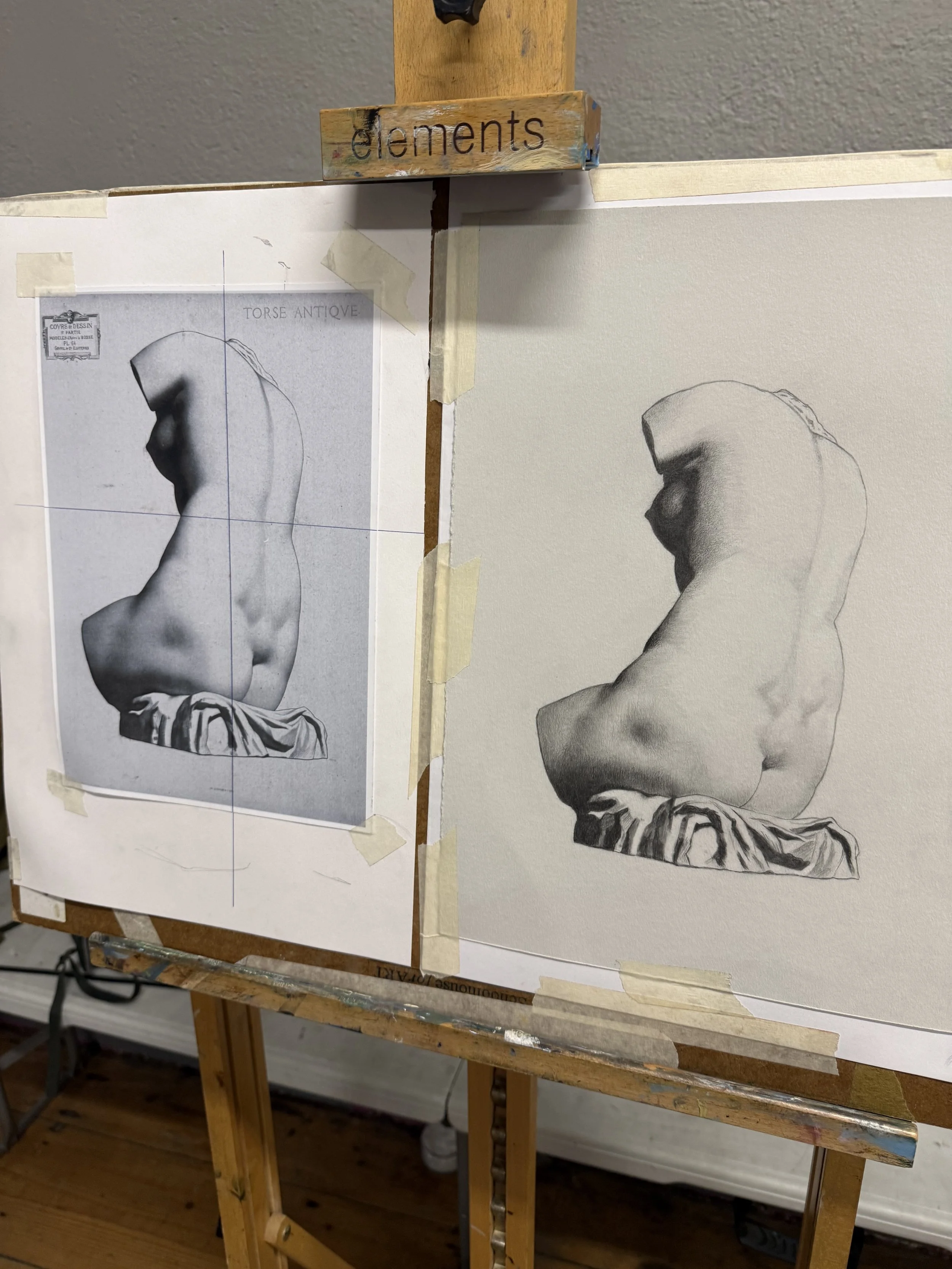

What is Bargue Drawing & why is it important?
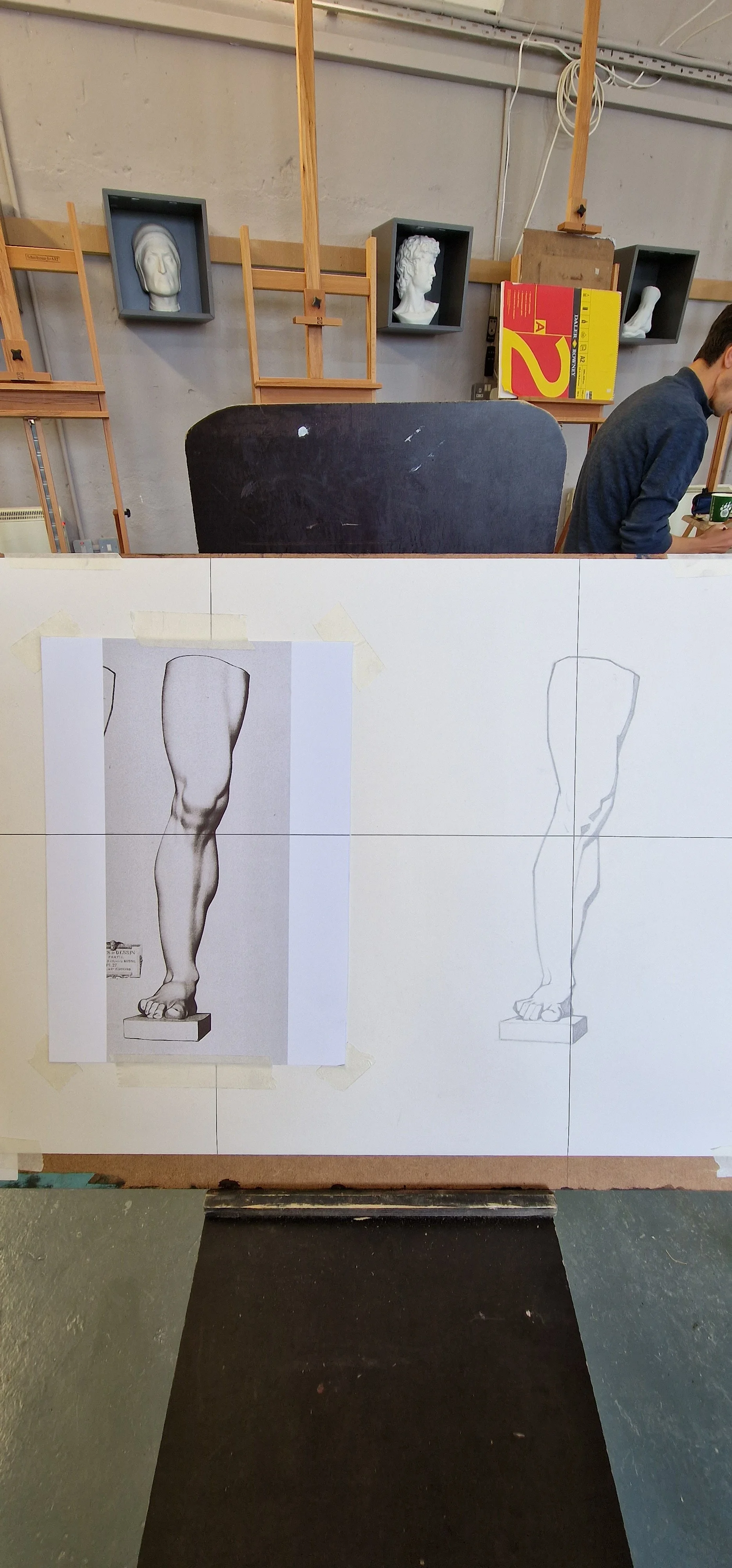
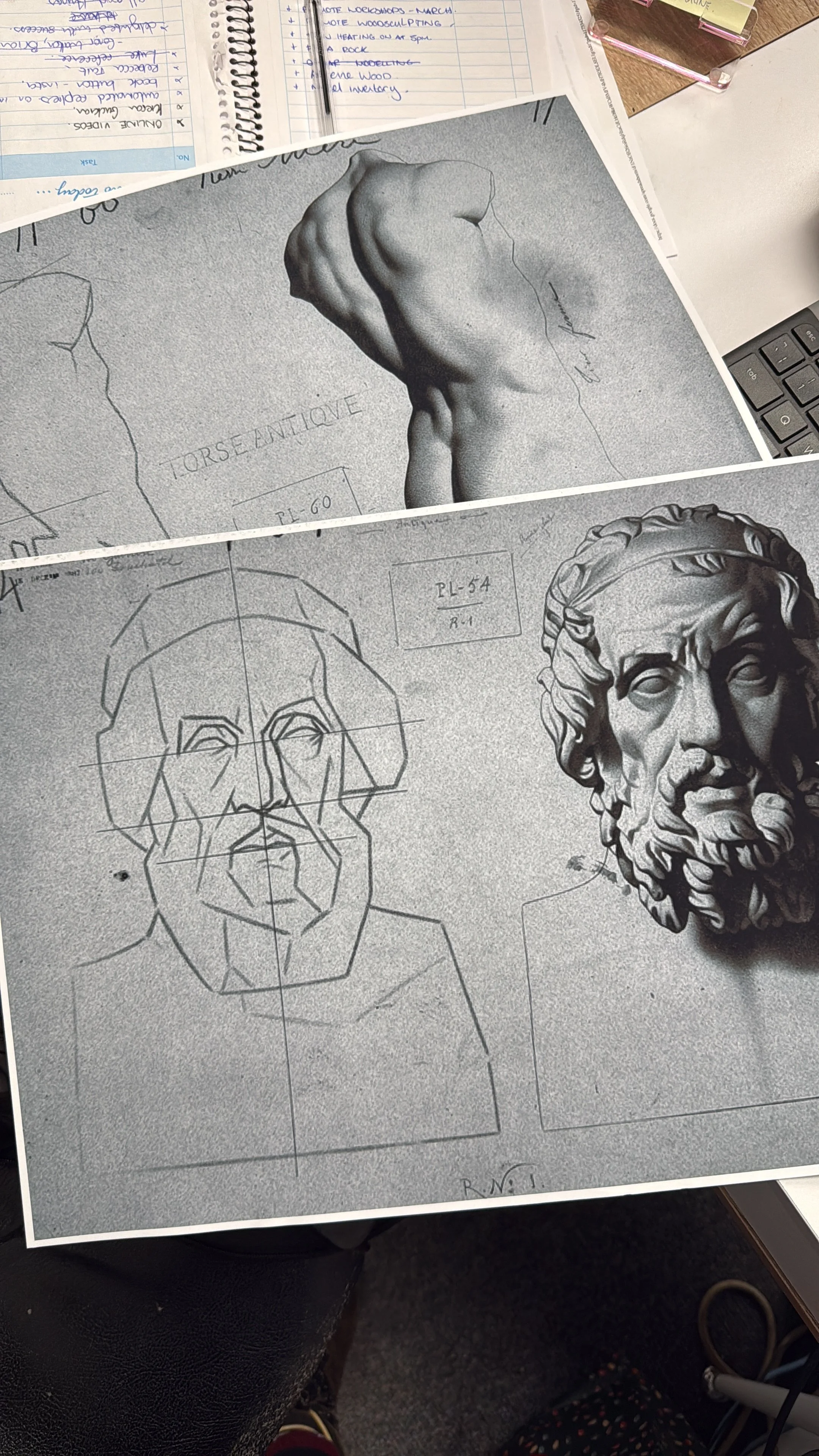
The Charles Bargue Drawing Course is a series of 197 lithographic plates created in the 1860s by French artist Charles Bargue in collaboration with Jean‑Léon Gérôme . It was designed as a progressive training system to guide students from simple copies to drawing from life .
How it works:
You place a printed Bargue plate beside your easel and copy it using the sight‑size method – stepping back to compare your drawing and the plate side‑by‑side at the same size . The plates range from simple outlines of facial features to complex figure drawings, gradually increasing in difficulty .
What you learn:
Accurate proportion and measurement
Seeing and depicting light and shadow from a two‑dimensional reference
Edge control (hard, soft, lost)
Value rendering
Why it works: Bargue drawing removes the complexity of colour and three‑dimensional form, allowing you to focus purely on line, shape, and value . Students who master this develop what one atelier teacher calls "the ability to accurately record what the eye sees – removing deviation or mental hindrance" .
Interesting fact: Pablo Picasso and Vincent van Gogh both copied the complete Bargue course
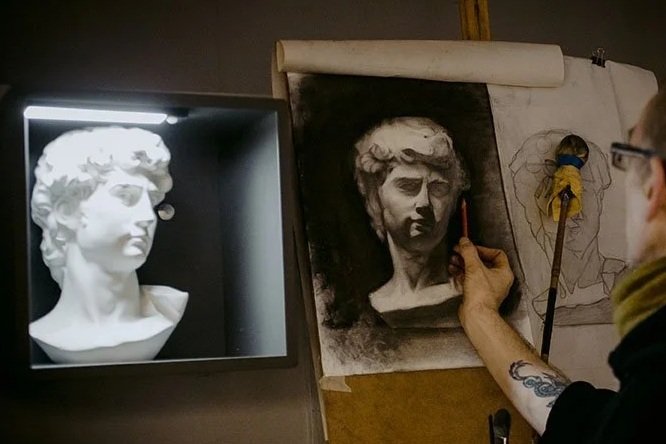
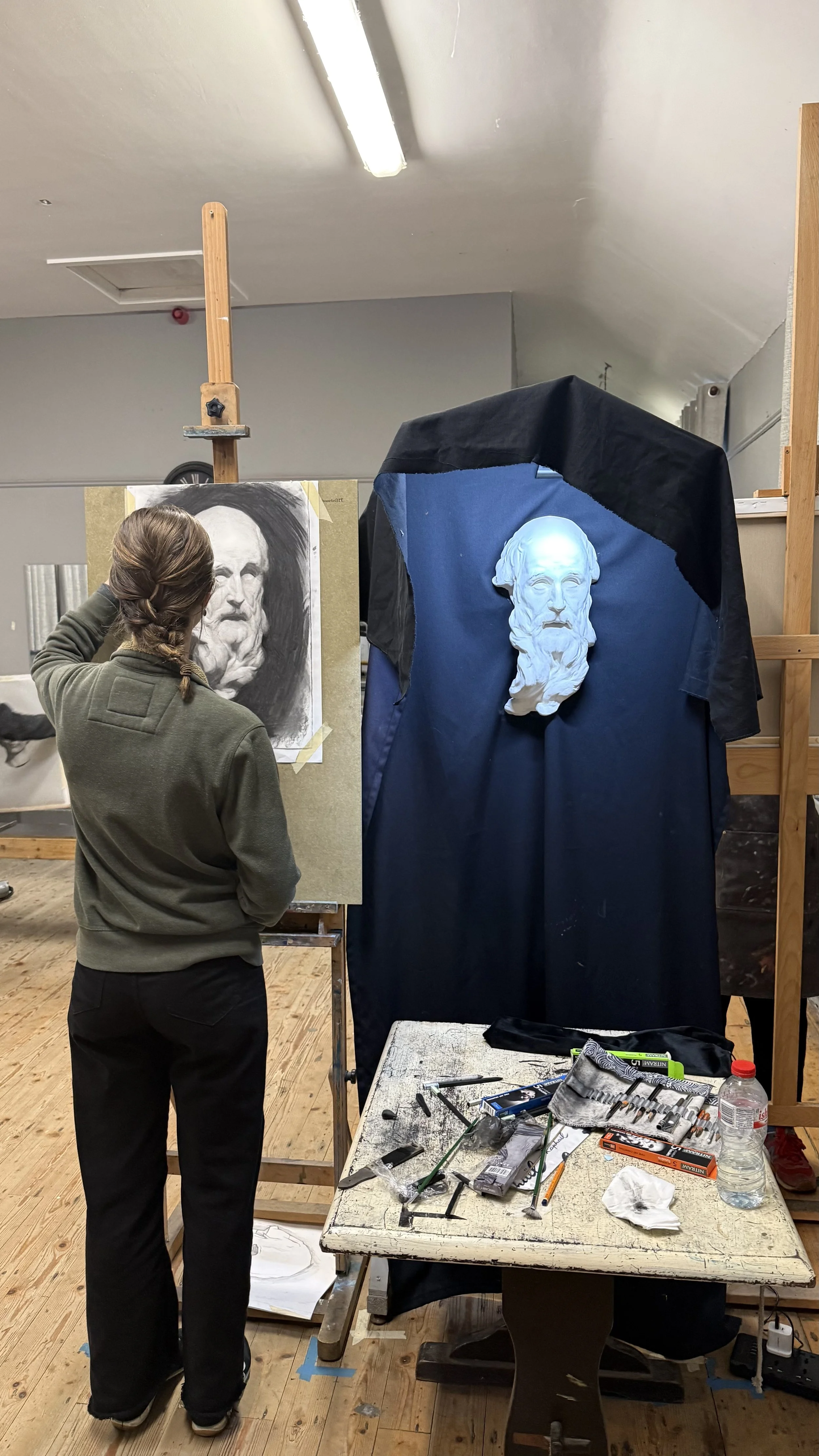
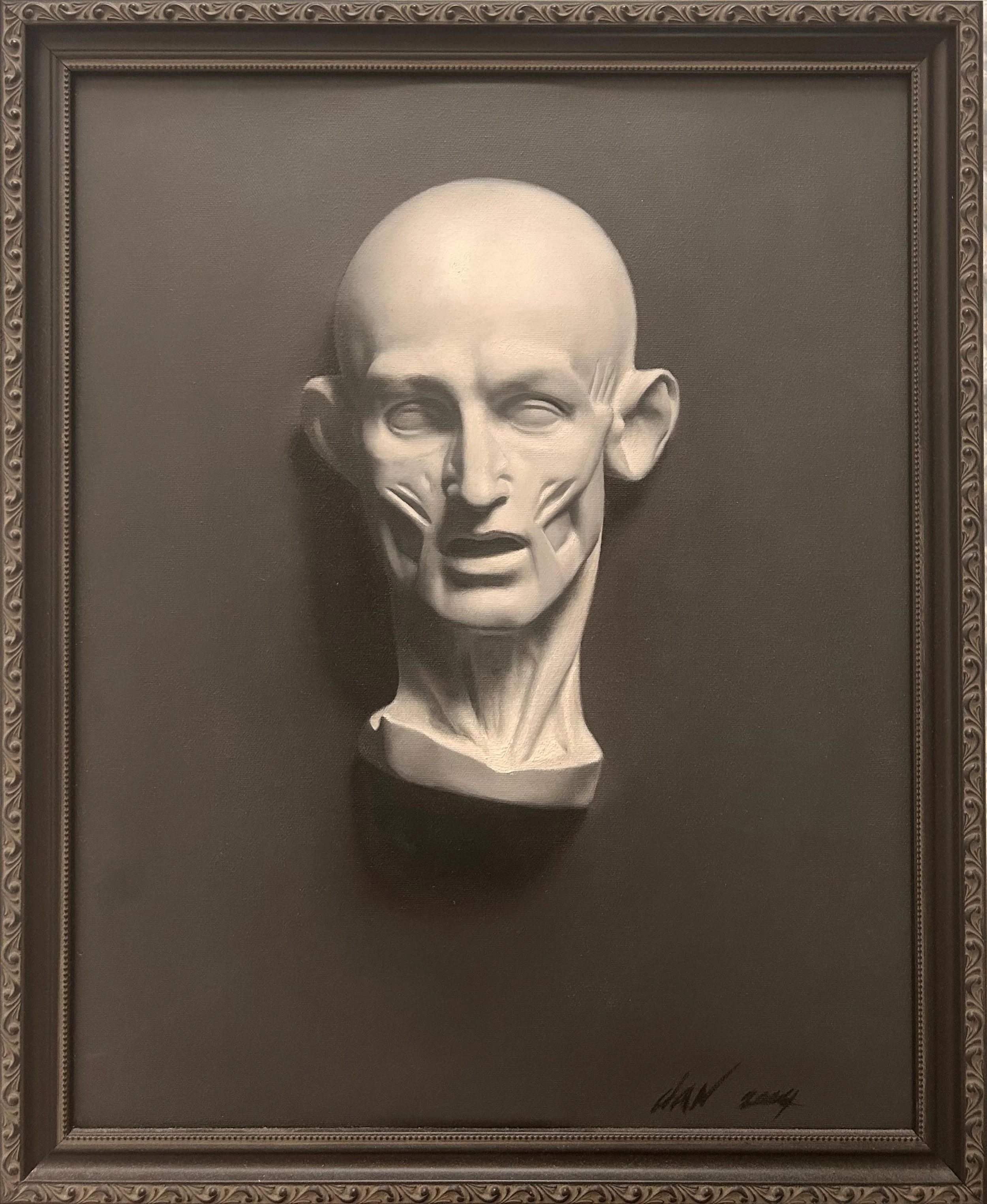
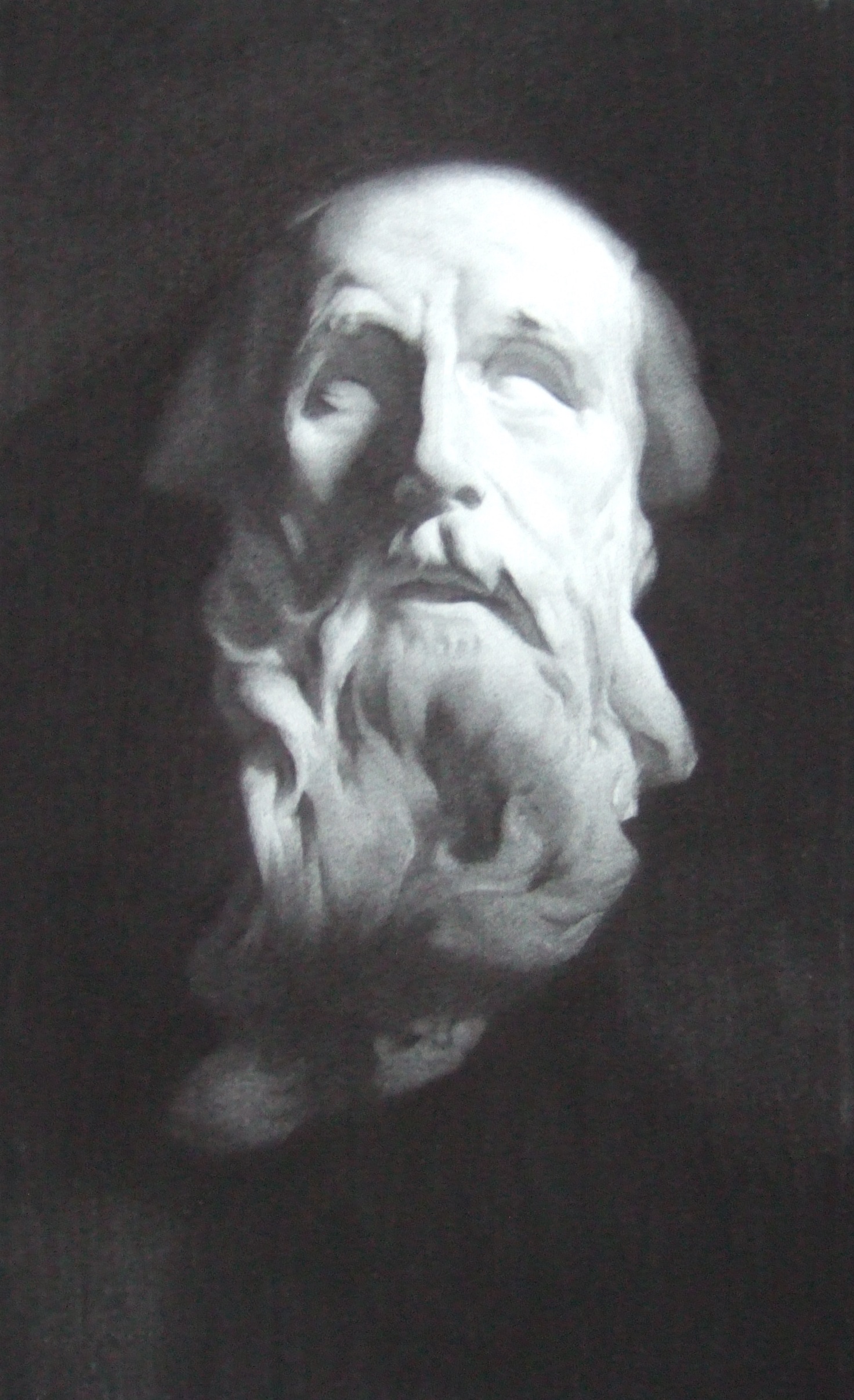
What is Cast Drawing and Painting and how does it improve your art practise?
Once you have mastered two‑dimensional copying through Bargue, you progress to cast drawing – working from a three‑dimensional plaster cast of a classical sculpture .
What it is:
A plaster cast (often a fragment of a classical sculpture like Michelangelo's David) is placed in front of you, lit from a single light source to create clear shadow shapes. You draw or paint it using the same sight‑size method .
Why casts are used:
The cast is white – no colour to distract you
It is perfectly still – no movement
The contrast of light and dark is greater than on a live model
It allows you to focus entirely on form, value, and light logic
What you learn:
Translating three‑dimensional form onto a two‑dimensional surface
Seeing and rendering a full value range
Creating the illusion of depth and atmosphere
Painting techniques in grisaille (monochrome oil)
Meet the Tutors