
YANNY PETTERS | WATERCOLOUR PAINTING BASICS
online tutorial Summary
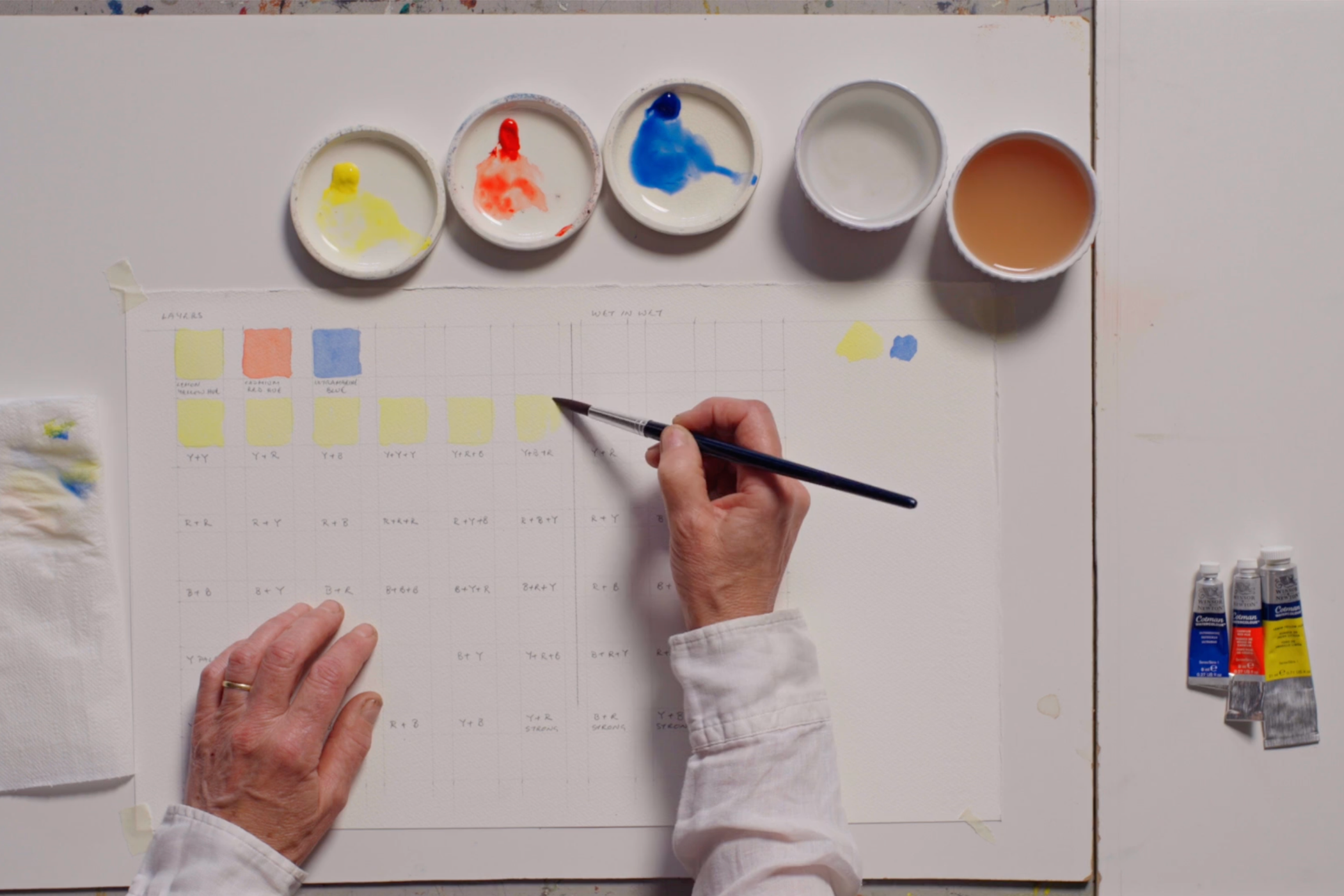
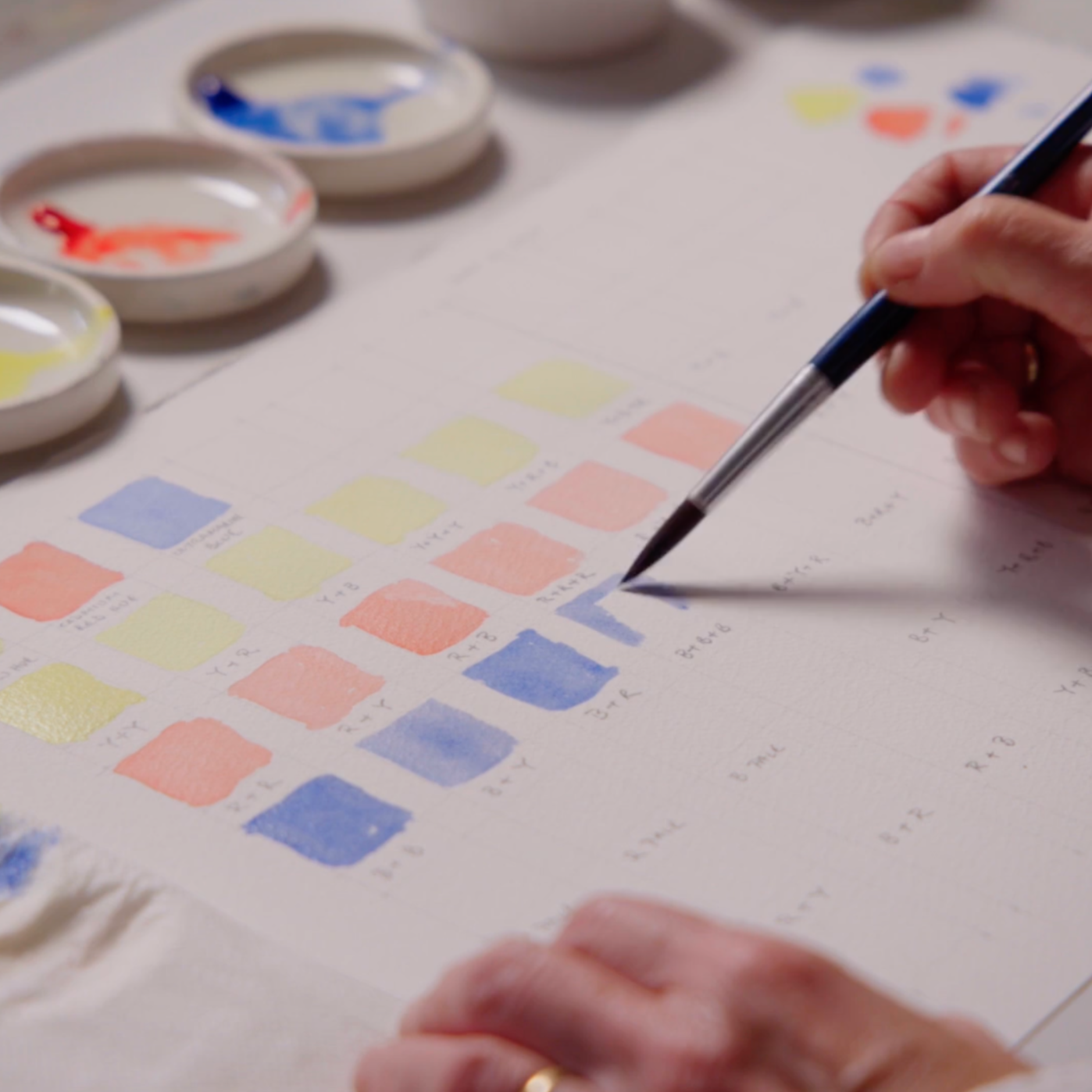
This course, led by botanical artist Yanny Petters, focuses on the fundamental skill of creating a vast colour range using only a limited palette of three primary colours: Lemon Yellow, Cadmium Red, and Ultramarine Blue.
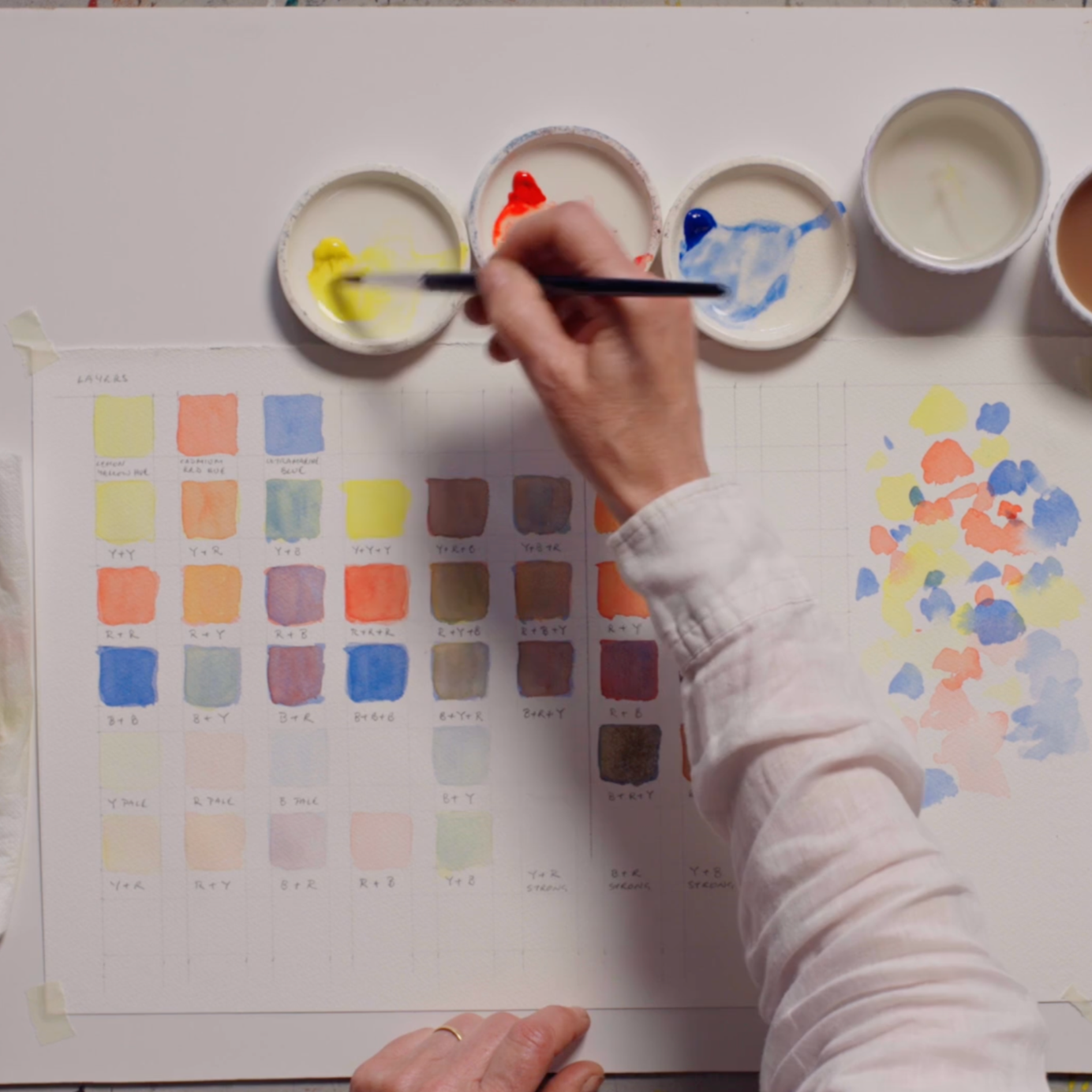
You will learn to mix a complete spectrum through two primary methods. The first is layering, building up translucent glazes to create complex hues and deep, luminous colours. The second is wet-on-wet application, which allows for soft, organic blends directly on the paper.
The session provides essential techniques for controlling your medium, including how to manage the consistency of your paint and water to achieve everything from pale tints to saturated colours. This exercise is a practical foundation in colour theory and watercolour technique, designed to build your confidence and intentionality.
By the end, you will have created a personal colour reference and gained the skills to mix nuanced, vibrant colours for any subject, all from a minimal and strategic palette.
Course Preview

Course FAQ
-
Core Colour Theory: How to mix a complete colour spectrum using only a limited palette of three primary colours: Lemon Yellow, Cadmium Red, and Ultramarine Blue.
Fundamental Watercolor Techniques:
Layering (Glazing): Building complex, luminous colors and deep tones by applying translucent glazes, allowing each layer to dry completely.
Wet-on-Wet Application: Creating soft, organic blends and dynamic color transitions by mixing pigments directly on damp paper.
Paint & Water Control: How to master the paint-to-water consistency to achieve a full range of values, from the palest tints to highly saturated colors.
Practical Application & Observation: A foundational method for creating nuanced, vibrant greens and earthy browns that are more lively than their tube-made equivalents.
How to create a personal colour chart for future reference, understanding how colours shift from wet to dry.
-
Paints:
Lemon Yellow
Cadmium Red
Ultramarine Blue
Brushes:
A watercolour brush, such as a size 12 nylon brush.
Painting Surface:
Watercolour paper.
Palette & Mixing:
A palette or small dishes (like mixing bowls) for holding and mixing paint.
Two containers of water (one for cleaning, one for clean pigment).
Clean-Up & Control:
Tissues or paper towels for blotting brushes and controlling moisture.
-
Suitable for all levels.
-
The course is composed of one video, a total of 42 mins. Enjoy the benefit of being able to watch and follow along at your leisure for the duration of your access.
-
How does the 3-month access work?
This is a one-time payment that gives you access to the course for three months. There’s no automatic renewal - your access simply ends after the 3-month period.How do I access my course?
Once you’ve purchased the course, simply log in to your account at schoolhouseforart.com. Click on Account at the top right-hand side of the page, and your course will be available there.Can I extend my access after 3 months?
Yes! If you’d like continued access, you can purchase the course again at any time.What happens after 3 months?
Once the 3-month period is over, your access will expire. You won’t be charged again unless you choose to make another purchase.What if I only need access for a few weeks?
That’s fine. You’ll have access for the full 3 months, so you can move through the material at your own pace.Are refunds available?
We don’t offer refunds, but you’ll have access to the course for the full 3-month period you’ve paid for.Does this purchase give me access to other courses?
This purchase covers one individual course for 3 months. Other courses are available separately.Are there any technical requirements?
All you need is a stable internet connection and a modern web browser to enjoy the course.Can I share my access?
Course access is for individual use only and can’t be shared.Need help or having technical issues?
We’re happy to help. Just reach out to us at info@schoolhouseforart.com

YANNY PETTERS | DANDELIONS IN WATERCOLOURS
online tutorial Summary
Join artist Yanny Petters for a fascinating journey into botanical watercolour painting. Using the vibrant yet forgiving medium of watercolour, Yanny will show you how to create a stunning range of hues using just three primary colours. She will guide you through the entire process, beginning with how to create a careful and precise drawing from a photo reference. You'll then discover the secrets of mixing a beautiful, naturalistic array of greens for the stem and leaves, and earthy browns for the core, directly on your paper.
A key focus of the class is mastering the unique properties of watercolour. You will learn how to build up delicate, translucent layers of paint to capture the flower's ethereal lightness and create a sense of depth and luminosity. Yanny will share professional tips for controlling washes, preserving white space for highlights, and adding those final, defining details that make your botanical painting truly pop with life. This is the perfect class for anyone who loves nature and wants to capture its delicate beauty in a simple, rewarding, and meditative way.
Course Preview


Course FAQ
-
The Drawing Foundation: How to trace a photo reference and transfer a clean, faint outline onto your watercolour paper.
Limited Palette Magic: How to mix a wide spectrum of realistic greens, browns, and tones using only yellow, red, and blue.
Layered Watercolour Technique: The process of building depth and colour by applying thin, glazed layers, allowing each to dry completely.
Botanical Accuracy: How to observe and paint plant structures like stems and leaves to show their form and dimension.
Adding Fine Details: Techniques for using a water-soluble pencil to add sharp, final details and definition without outlining.
Correcting Mistakes: How to lift colour with a damp brush to correct errors or create highlights, like the dandelion's fluffy seeds.
-
Paints: A limited palette of three primary colours: Lemon Yellow, Cadmium Red, and Ultramarine Blue (Artist's quality, like Winsor & Newton Cotman).
Brushes: A variety of round nylon brushes (e.g., size 2, 5/6, and 12) and one small flat brush (e.g., size 4) for lifting colour.
Pencils: Both hard (HB) and soft (2B) graphite pencils, plus a sepia water-soluble pencil (e.g., Derwent Inktense).
Paper: Hot-pressed watercolour paper (smooth surface) for the final painting, and spare paper for testing colours.
Other Essentials: Two jars of water, absorbent tissue/paper towels, a sharpener, a kneaded (putty) eraser, and low-tack tape.
Transfer Tools: Tracing paper and a photo reference of your subject.
-
Suitable for all levels - good understanding of the basic use of watercolour would be an advantage.
-
The course is composed of three videos, a combined total of 97 mins. Enjoy the benefit of being able to watch and follow along at your leisure for the duration of your access.
-