
iNDIRECT PAINTING | SINEAD LAWLESS
wELCOME TO YOUR ONLINE TUTORIAL:
iNDIRECT PAINTING WITH SINEAD LAWLESS

Course FAQ
-
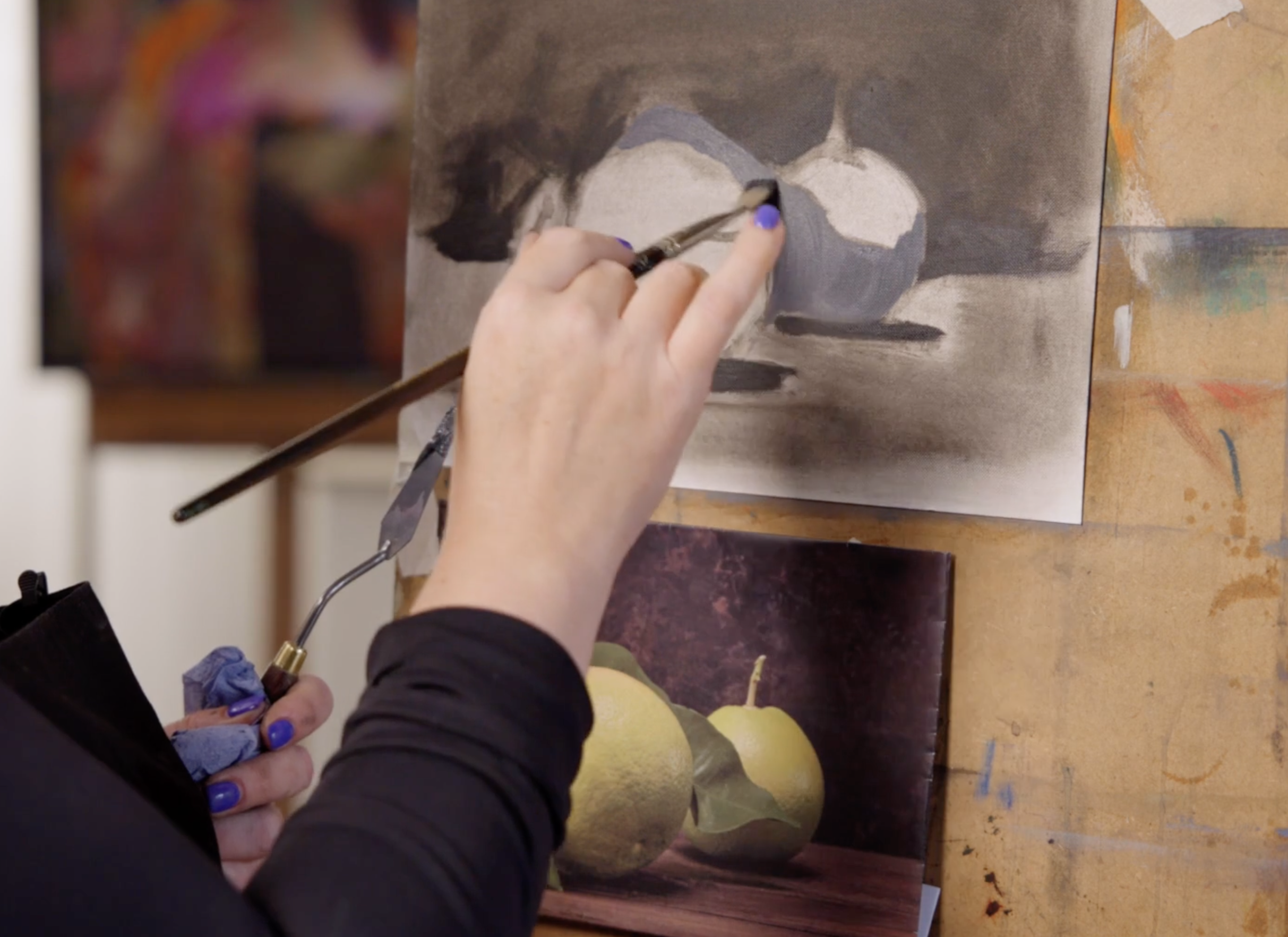
The blocking-in process: How to apply pre-mixed grey values from dark to light to build form and volume.
Brushwork techniques: How to load your brush and apply paint effectively, and when to switch to smaller brushes for detail.
Working dark to light: The fundamental oil painting approach of establishing shadows first and adding highlights last.
Maintaining clean colours: The critical practice of thoroughly cleaning your brush between values to avoid muddy mixtures.
Making corrections: How to use a palette knife to scrape away paint and redefine shapes for accurate drawing.
Managing edges: The final step of blending with a clean, dry brush to create soft transitions and hard edges, enhancing the sense of three-dimensional form.
The complete workflow: From a basic tonal wash to a finished, detailed monochromatic underpainting ready for colour glazing.
-
Paints:
Titanium White
Ivory Black
Brushes:
A range of flat brushes in different sizes (e.g., sizes 2, 4, and 6 are used in the demo).
Painting Surface:
Canvas paper or oil paper pad (specifically designed for oils; do not use cartridge paper).
A primed canvas or panel would also be suitable.
Palette & Mixing:
A flat palette made of wood, glass, or disposable paper. (Palettes with compartments are not suitable).
Palette Knife for clean mixing and scraping.
Solvents & Mediums:
Solvent such as Gamsol, Sansodor, or a plant-based alternative (like Michael Harding's Miracle Medium base).
A jar for the solvent.
Rags & Clean-Up:
Rags or paper towels for cleaning brushes, wiping the palette knife, and removing excess paint from the canvas.
Key Techniques & Tips Mentioned:
Solvent is used sparingly, only for the initial toning wash and drawing. The rest of the underpainting uses paint with no medium.
The palette should be a neutral tone (not white) for accurate value judgment.
Do not use your best brushes for the initial drawing/toning stage, as it can be rough on the hairs.
-
Suitable for all levels - good understanding of the basic use of oil painting would be an advantage.
-
The course is composed of two videos, a combined total of 47 mins. Enjoy the benefit of being able to watch and follow along at your leisure for the duration of your access.
-
INDIRECT PAINTING
-
Part 1: Indirect Painting
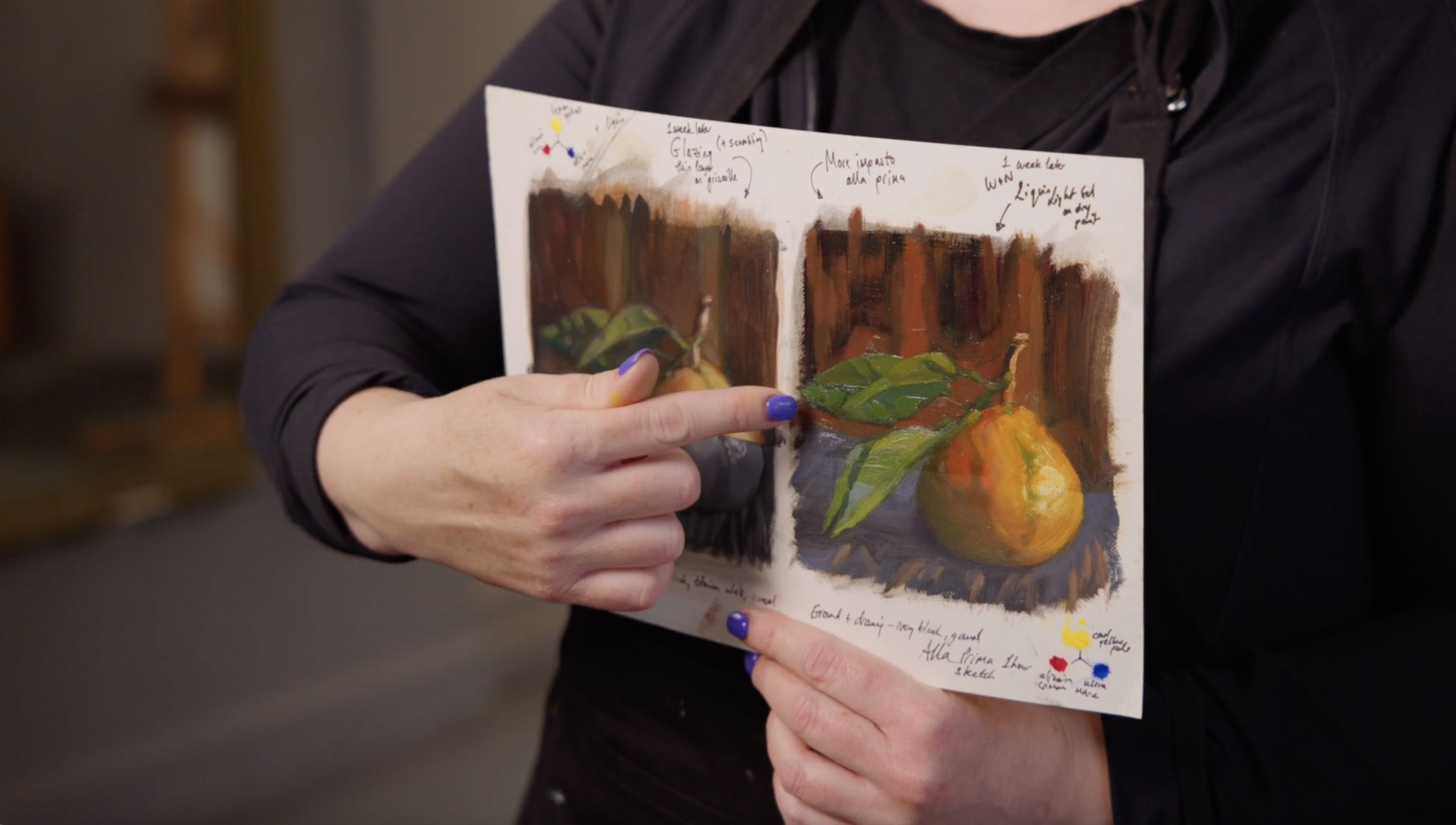
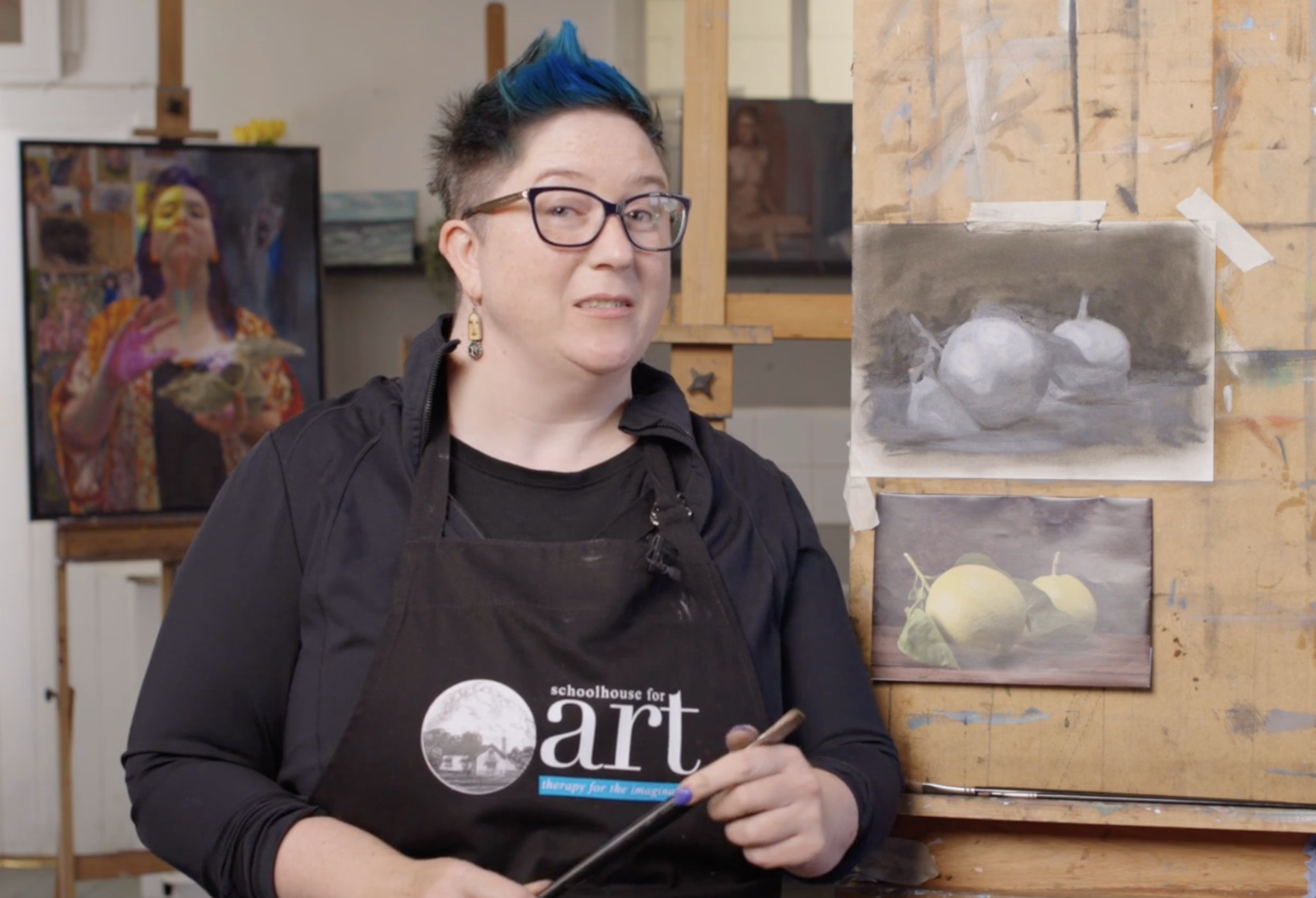
In this video Sinead introduces oil painting's two main methods before focusing on the indirect, multi-layer approach. You will learn to create a tonal underpainting, from preparing materials and mixing a grey value scale to toning the canvas and blocking in shapes. This establishes the essential foundation for future colour layers.
-
Part 2: Indirect Painting
This second part builds on your underpainting. You'll apply pre-mixed greys dark to light, refining shapes with smaller brushes. Key techniques include scraping back with a palette knife and blending edges for soft transitions, resulting in a finished monochromatic study ready for colour glazing.
-