UNDRAWING THE FIGURE | ALEX ALFORD
Dates: Wednesday 28th October - Sunday 1st November
Times: 10am - 4pm
Location: Enniskerry
Skill Level: all levels welcome
Please see detailed workshop information below
If this course is fully booked or not currently scheduled, go ahead add your name to the waiting list HERE
Payment plans available contact us directly
aBOUT THE WORKSHOP
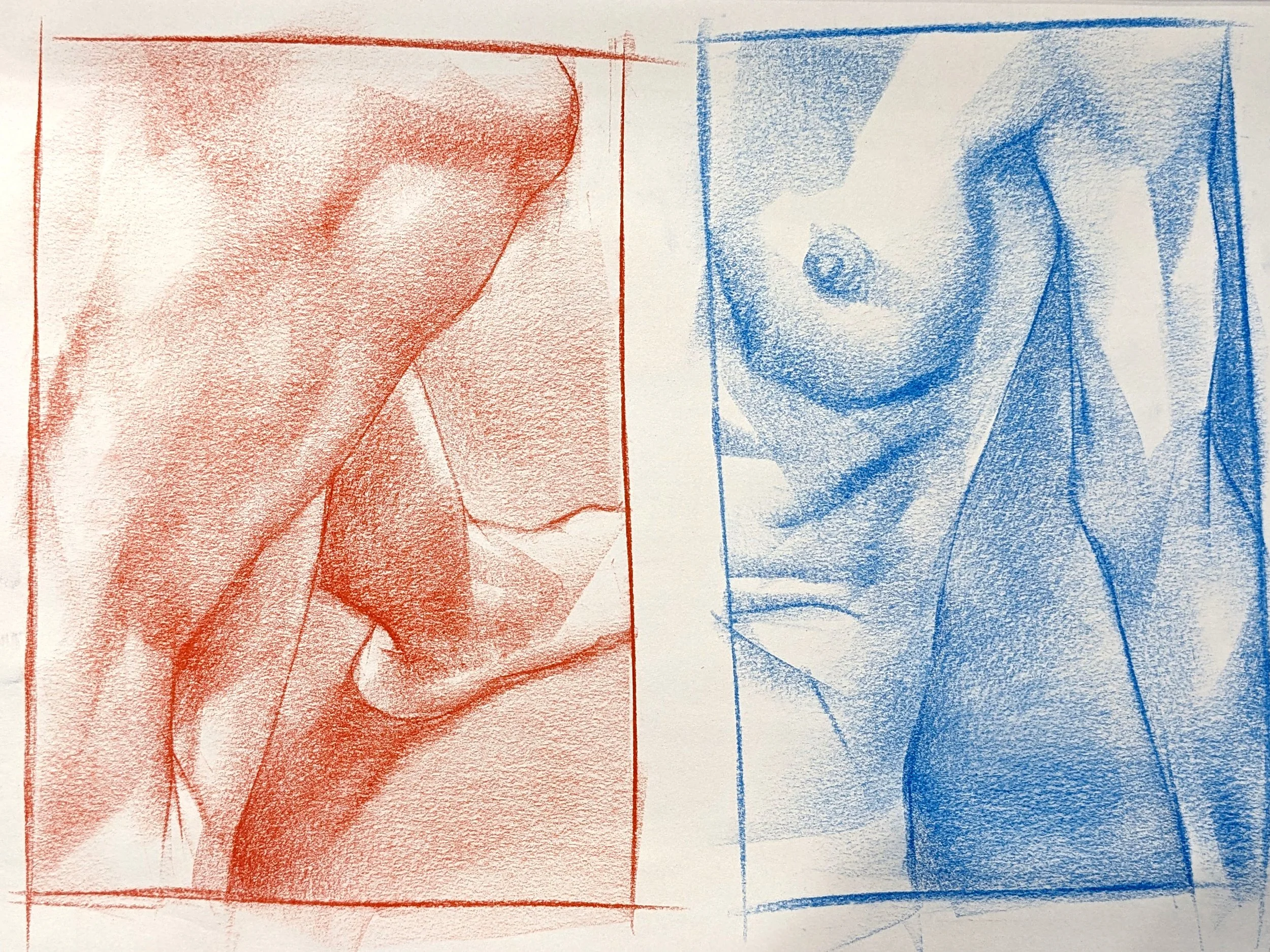
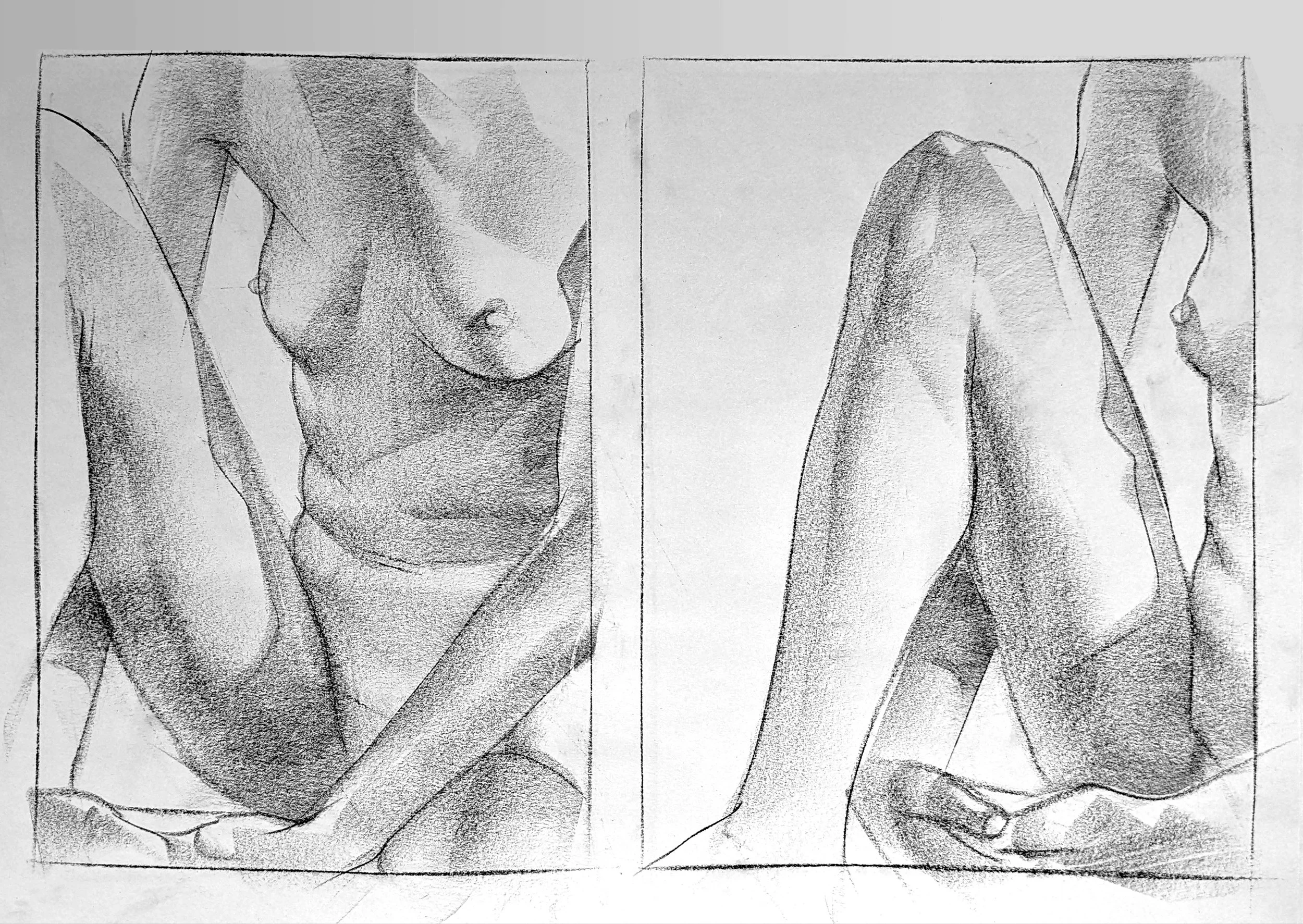
The basic premise of Undrawing is that we have an innate sense of spatial geometry; it’s why we can catch a ball or see when a picture frame is crooked. This awareness can be leveraged to allow us to draw from life quickly and accurately, using triangulation to establish proportions and simple marks to express light, shadow, and mass.
In other words, Undrawing is about seeing and capturing relationships. Once you internalize these principles, there’s nothing you see that you won’t be able to draw in any medium.
Alex has taught one-day Undrawing Workshops across the US and Europe since 2021. They tend to be fast-paced, data-dense experiences. By spreading the workshop across multiple days, we’re able to deepen the learning and more fully integrate the principles into our practice.
This 5-day workshop is organized by subjects of increasing complexity. Each day, we’ll draw from a live model, with plenty of demos and hand-on exercises. Students are welcome to sign up for individual days, but space preference will be given to those taking the entire course.
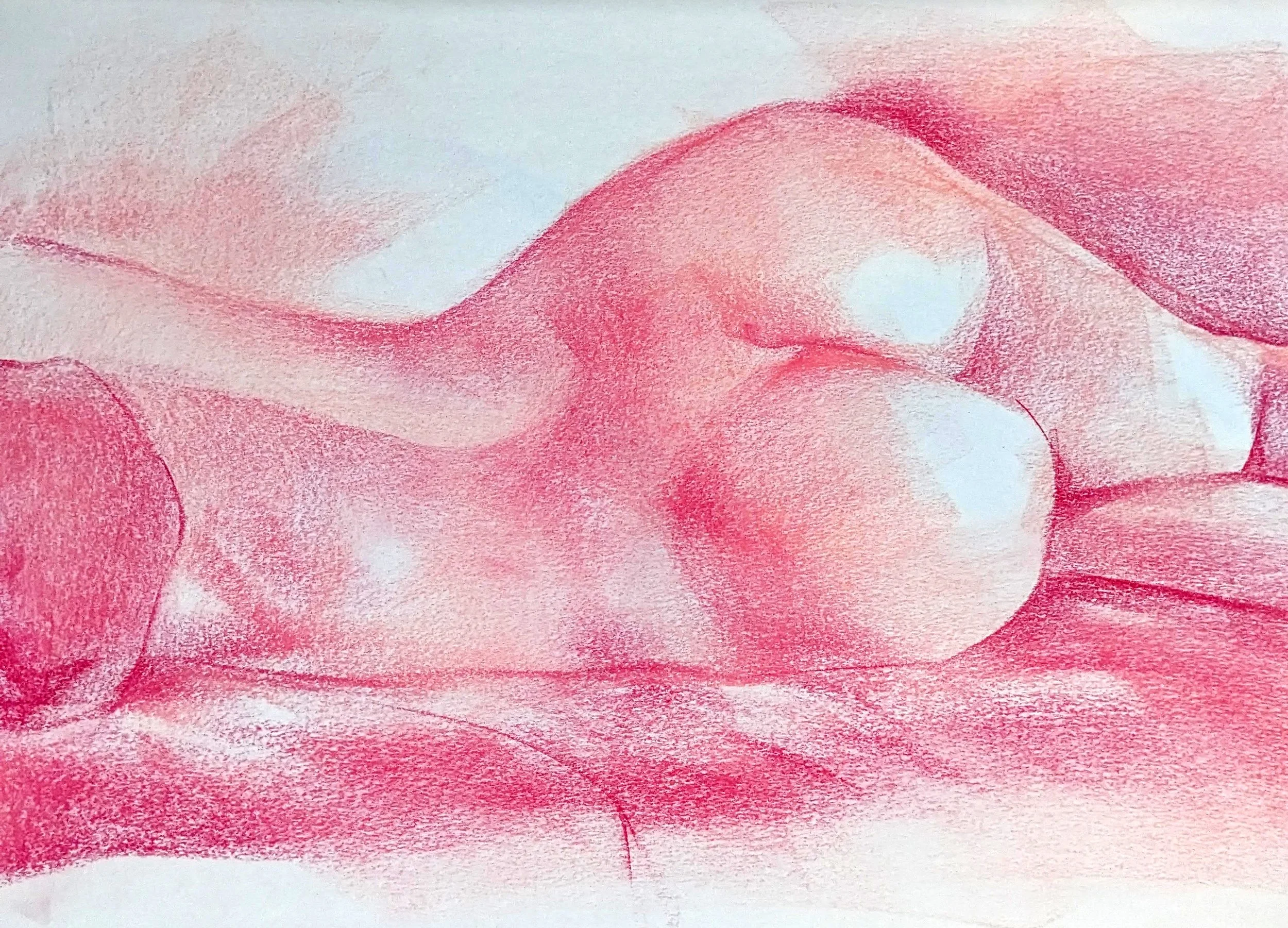
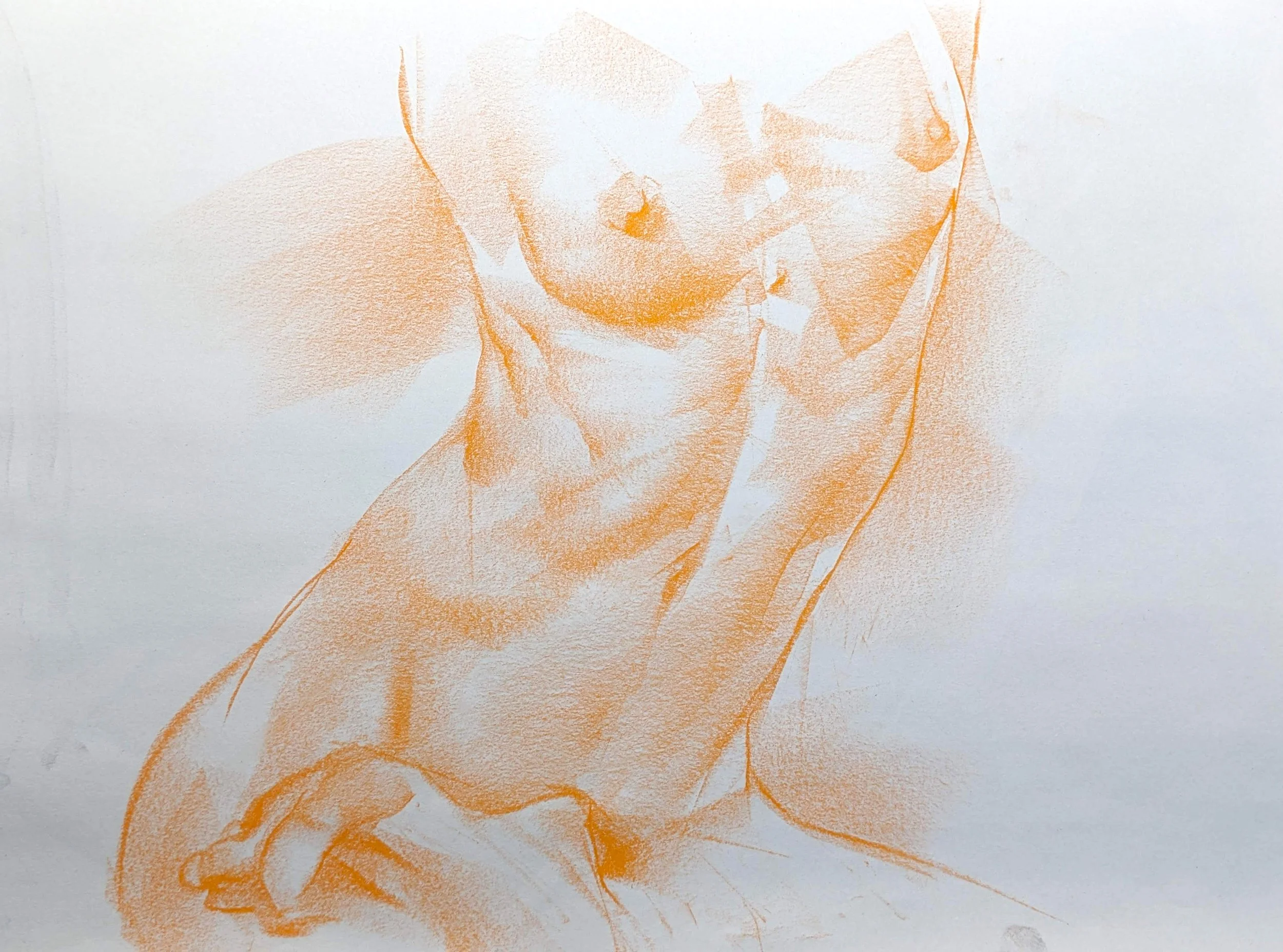
Day 1: Fundamentals of Undrawing
The meat and potatoes of Undrawing; be prepared to have multiple “aha” moments. We’ll start and end the day with the same pose, so you’ll have a “before” and “after” drawings to track your progress. The day will be a mix of demos and hands-on exercises as we draw from a live model.
Day 2: Undrawing Hands and faces
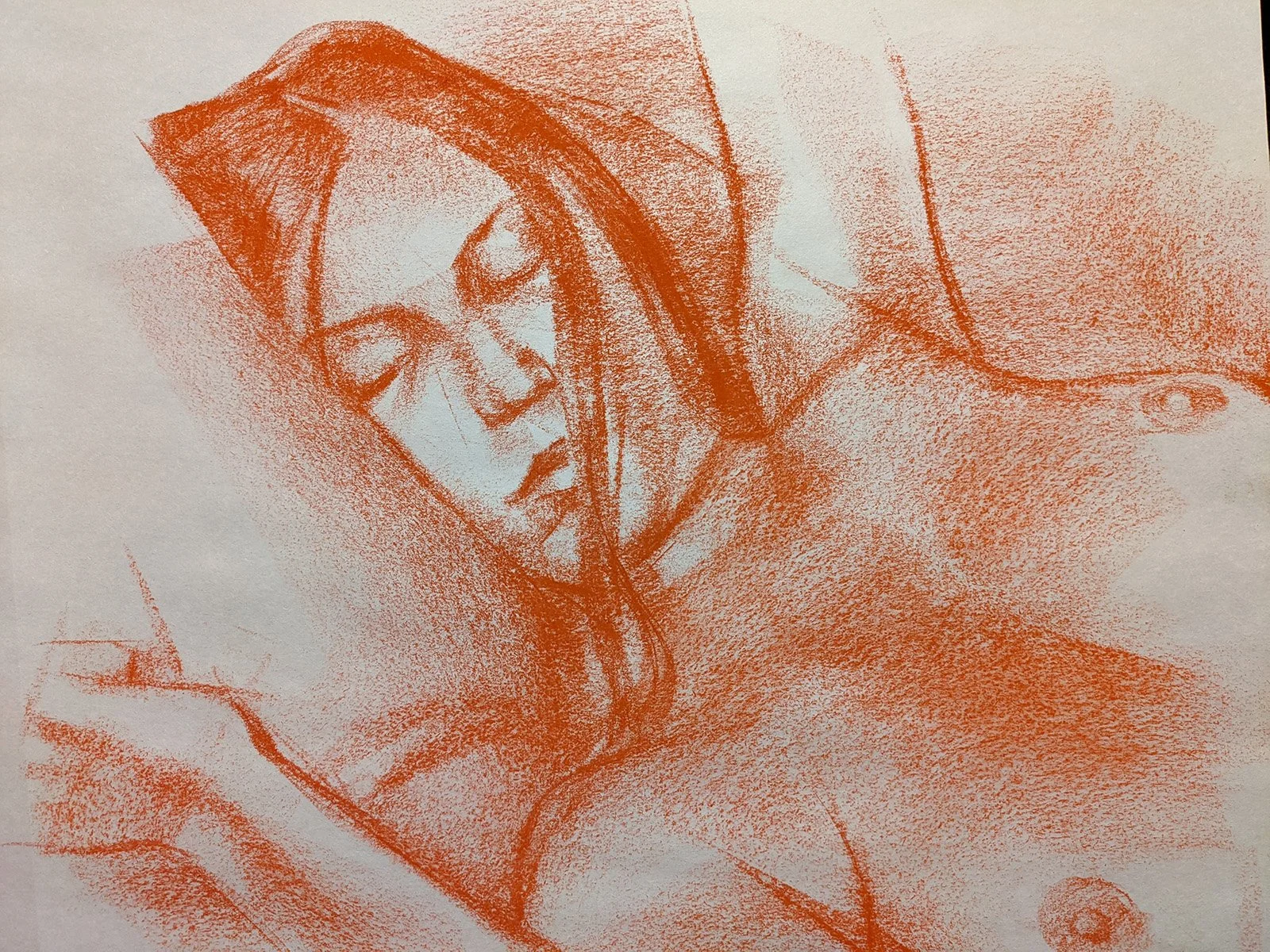
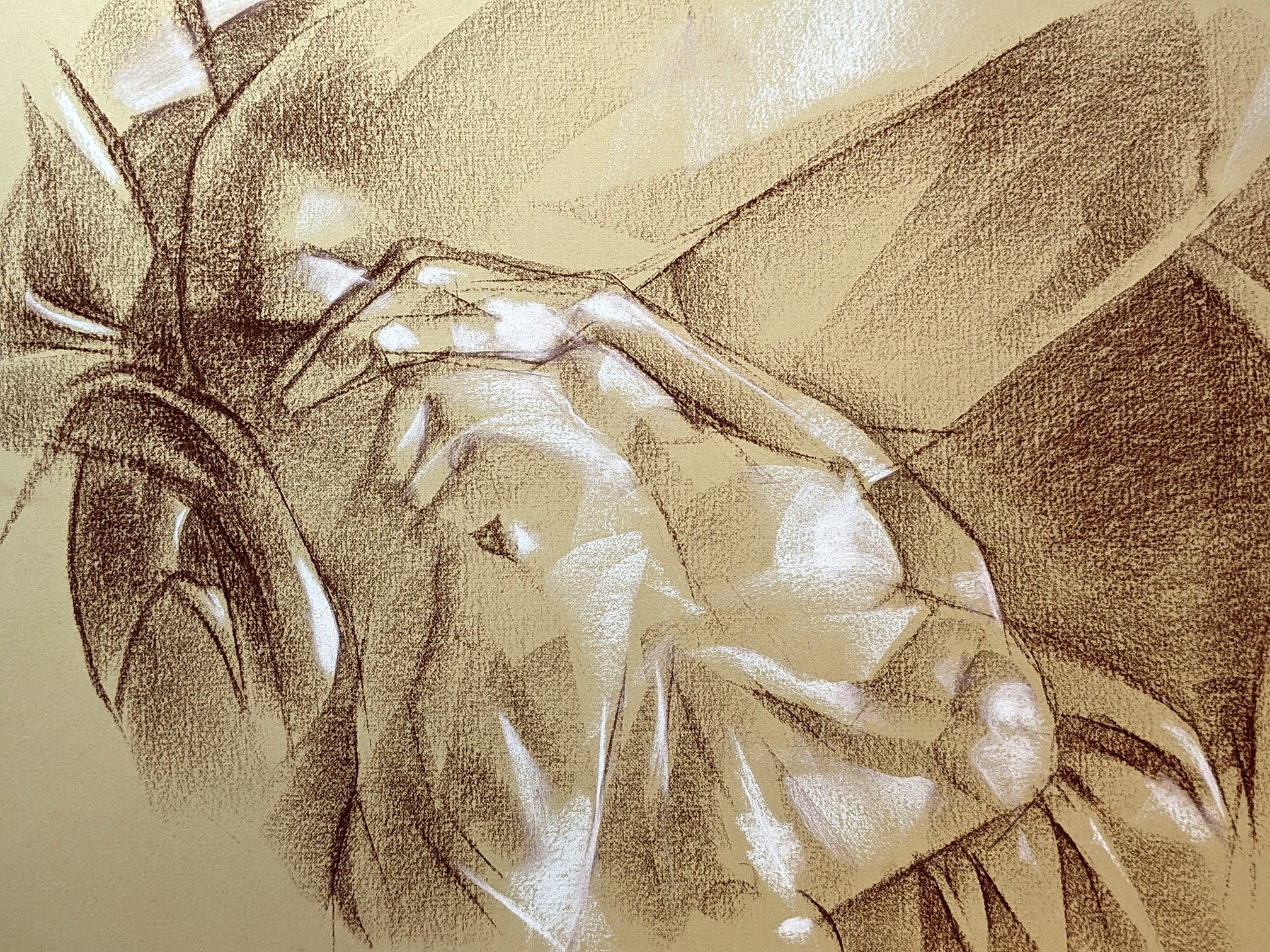
Hands and faces share similar complexities and expressiveness, so it makes sense to learn them together; hair and fabric share similar weight and flow, so it makes sense to combine those, as well. We’ll apply Undrawing fundamentals to capture quick portraits, as well as more detailed studies of hands and hair, both of the model and of each other.
Day 3: Tangles
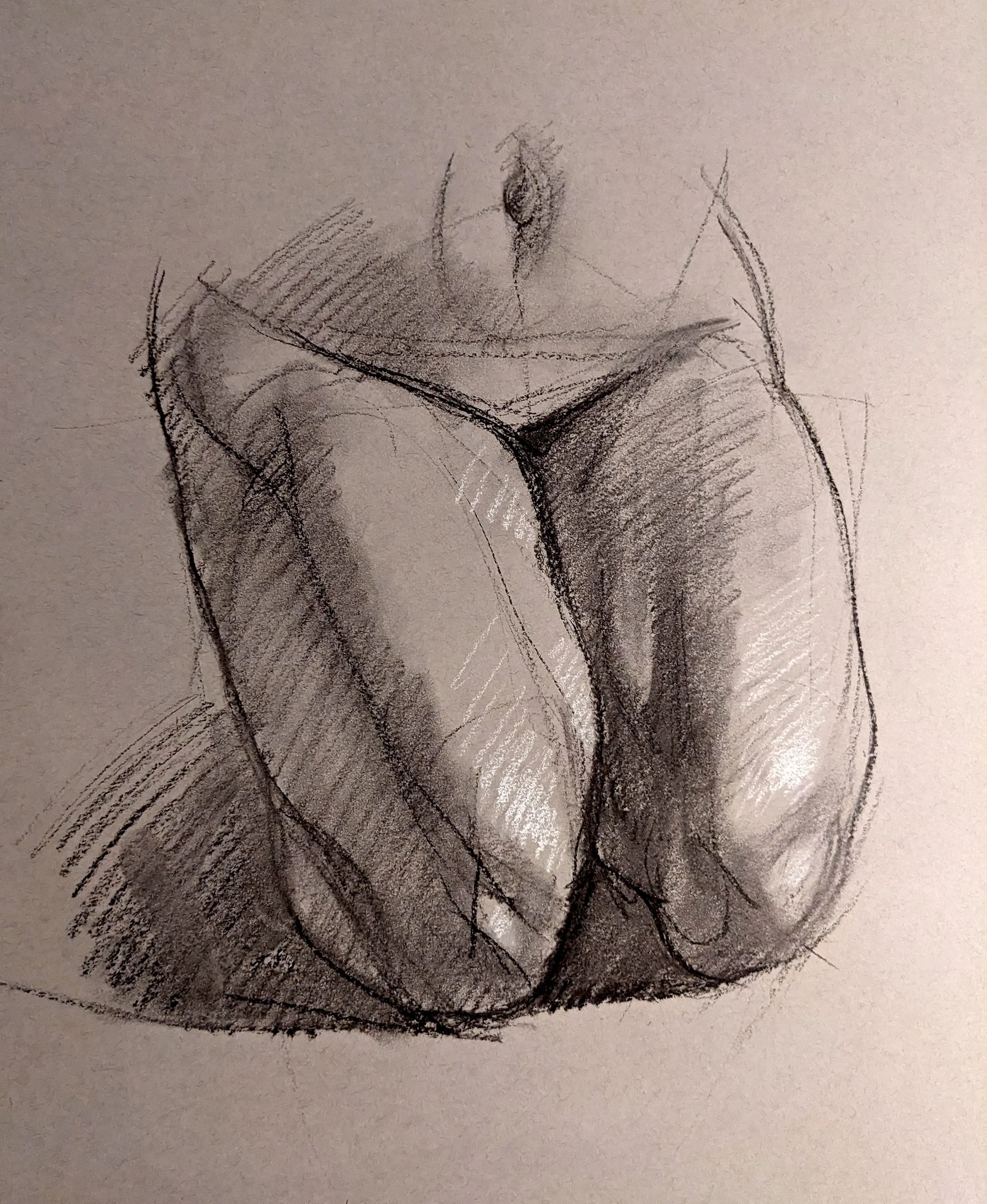
Tangles are complex poses with limbs entwined–sometimes also called pretzel poses. Counter-intuitively, these can be easier to capture than simpler, more static poses. In this limber workshop, we’ll explore how to capture tangles with speed, relying on the many points of reference afforded by intersecting limbs. Posing for this workshop will be the fantastic Olja, from Poland.
Day 4: Movement
Movement and gestures are considered difficult to capture in figure drawing. This is where your growing mastery of Undrawing principles really shines. From short gestures to so-called “snail poses,” where the model is in constant motion, your ability to quickly find significant shapes and your facility with expressive marks will result in dynamic drawings of marvelous expressiveness. Posing for this workshop will again be the amazing Olja.
Day 5: Mastery
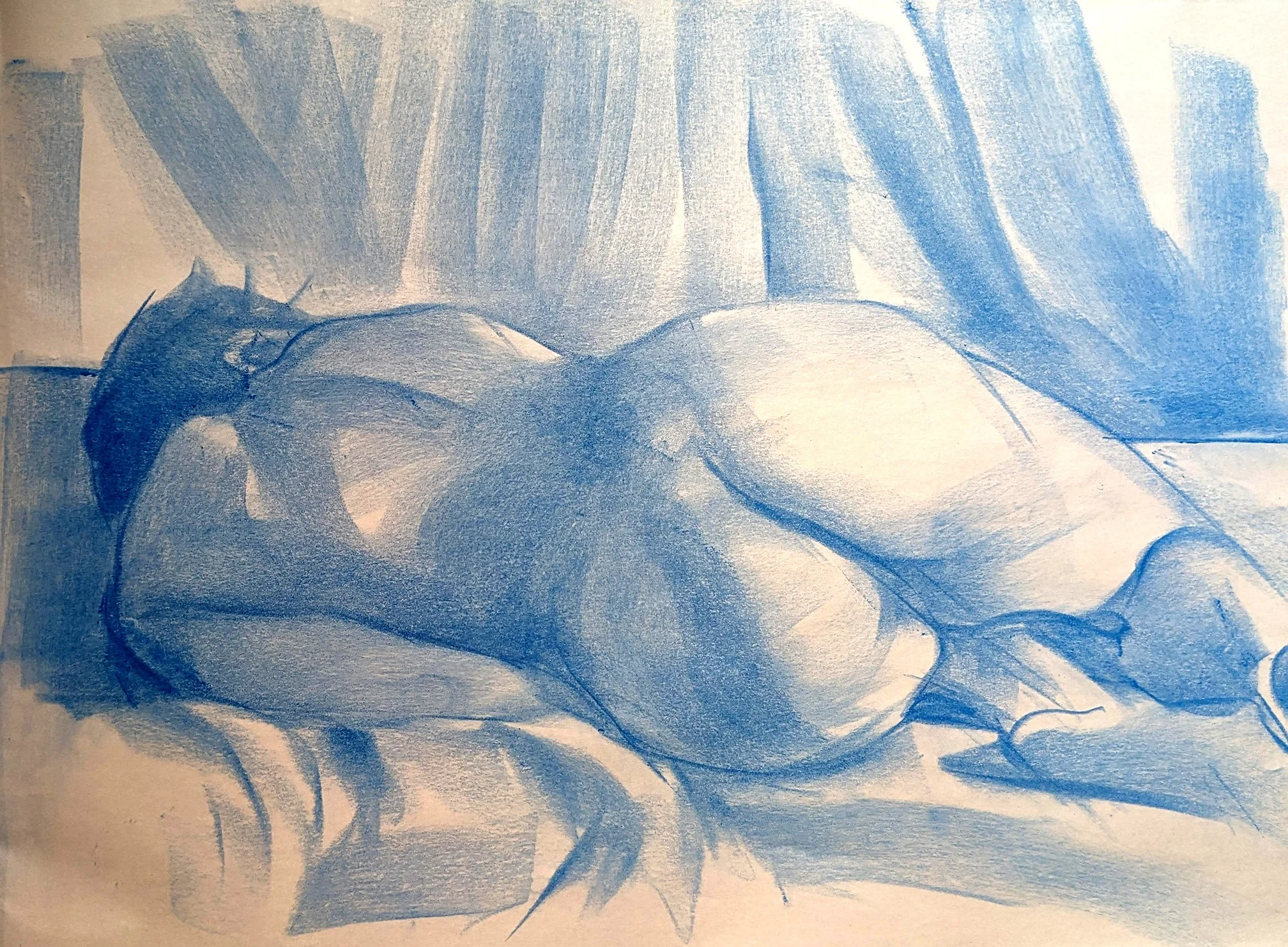
By this point, you’ll probably notice a marked spring in your step, and you’ll exude a palpable confidence when you enter the studio. We’ll spend the final day of the workshop luxuriating in our new powers, playing with colour, compositions and experimenting with expressiveness in our now easily attainable flow state. We’ll let the model use props, and it’s also possible we’ll have more than one model posing at once.
-
Undrawing will change the way you look at the world; it will also help you develop the confidence to explore what you don’t know. The fundamentals of Undrawing include::
Marks - simple, expressive
Grip - relaxed, consistent
Triangulation - proportions happen
Starting point - what grabs you first
Undrawing combines these with these processes;
start with an obvious relationship that's unique to the subject - don't rely on canon
complete each shape - make it recognizable
each mark refers to a previous one - triangulate
hand follows eye - skip around
draw shapes, not features - there is no nose
trust your eye
With patience and enthusiasm, you will be led through exercises that focus and strengthen your powers of observation, while developing your control and mastery of expressive marks.
-
With Undrawing’s emphasis on economy of marks, it’s strongly suggested that students bring the specific materials listed.
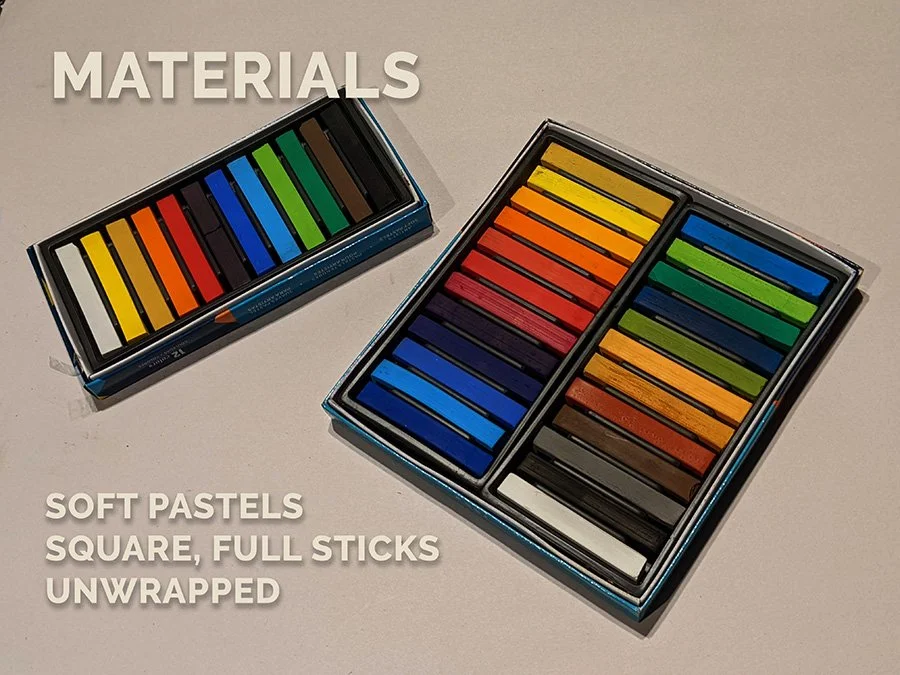
Soft Pastels: Inexpensive, full-length, square, unwrapped sticks. One or two sets of 12 colours will suffice for the week, but a set of 36 may be more economical.
Charcoal: Soft vine or dense square compressed sticks.
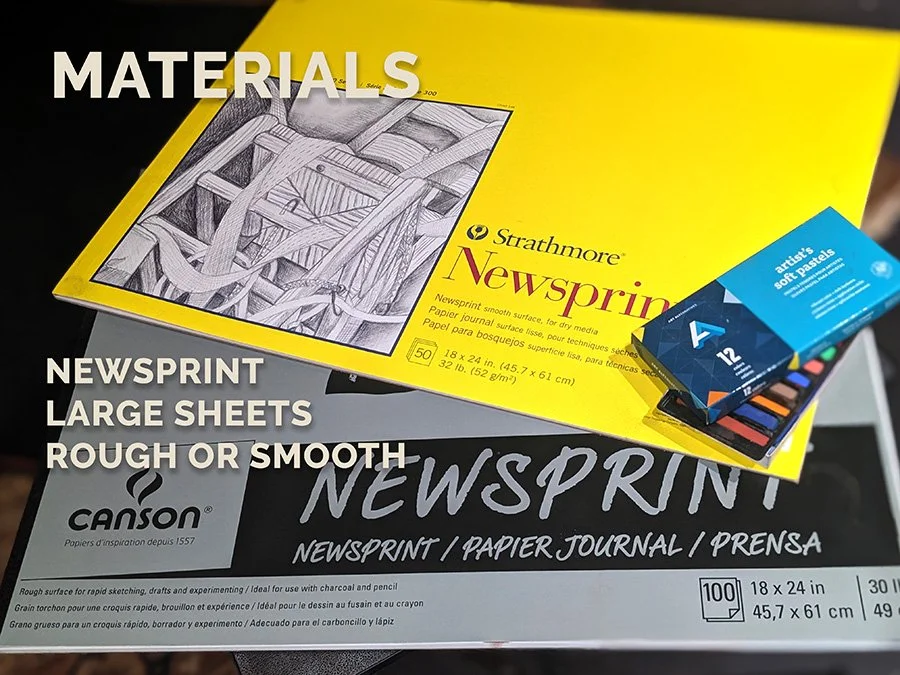
Paper: Newsprint or other inexpensive paper, 18x24" or A2. You’ll use 25-50 sheets per day, on average.
Square, soft pastels, unwrapped, are the most versatile. Compressed charcoal and conté crayon are acceptable. Large sheets of paper are essential, as we’ll be using broad, sweeping strokes.
“Every portrait that is painted with feeling is a portrait of the artist, not of the sitter.”